Artist: Copyright © Luk Martens (Feb. 2020).
|
Artist: Copyright © Luk Martens (Feb. 2020).
|
Market Hnefatafl is recommended for beginners!
In Historical Hnefatafl the king is armed and captured from 2 sides (so-called weak king).


Market Hnefatafl is recommended for beginners!
This simplified version of Tablut is suitable for demonstrating Hnefatafl at markets and board game events. We call it Market Hnefatafl.
It was first used at the Classic Board Game Café in Ubby, Denmark, in 2018, and has also been used at the Ringsted Medieval Festival.
No restricted squares.
Rules for printing:
The modern Hnefatafl variants arose from attempts to make rules work that contained misunderstandings caused by translation errors.

This is the modern tournament variant.
Shieldwall capture. Exit fort win.

This is the classic modern variant.
Draw forts and repetitions are allowed: Eternal repetitions are draws.

Same rules as Fetlar, but the king can be captured on the edge of the board and can thus be captured by two attackers when on a square next to a corner. Draw forts and repetitions not allowed.

Berserk moves. Two more types of pieces: a knight and four commanders. No rule about encircling all defenders (the commanders take care of breaking forts).
Berserk Hnefatafl rules.

These variants were invented by Luk Martens.
No restricted squares. Berserk rules (but weak king and win on edge).
Tyr: no special pieces.
Thor: Commanders who can short jump also over own fellow men.
Odin: Commanders and Variegated Men.
Loki: Commanders, Variegated Men and Guards.
Tyr and Odin Hnefatafl rules (Luk Martens)

Tyr 11x11

Odin 11x11

Sea Battle Tafl 9x9 (Nielsen setup)

Sea Battle Tafl 11x11 (Nielsen setup)


Short summary:
The pieces follow the lines in all directions. The rules are the same as in draughts.
When you cannot move any more without losing your last piece, you are Cuhkka! (same as checkmate)
NB! If Cuhkka is played with mandatory captures, then the Saami Cuhkka board game becomes identical to Alquerque (also known as Qirkat or El-quirkat) which is considered to be the Medieval parent of all draughts games.

Short summary:
Rules as in draughts.
The pieces follow the lines. They move only forward, but they capture in all directions along the lines.
A king can only be captured by a king. A prince can only be captured by a king or a prince.
You lost when
- you lost your king,
- you lost all other pieces,
- or if you cannot move anymore.
The Frisian Dablo 11x9 versions use mandatory capture.
Frisian Dablo0: Normal Dablo plus mandatory capture.
Frisian Dablo: Pieces move only diagonally forward, but capture in all directions as usual. Kings and princes can move backwards. Men on the last row are promoted to princes.
Frisian Dablo2: Pieces move only forward (3 directions), but capture in all directions (8). Kings and princes can move in all directions (8). Men on the last row are promoted to princes.
Frisian Dablo is Dablo merged with Frisian Draughts, invented by Aage Nielsen, Denmark, in Nov. 2022.
(Hat tip Brave-Frog, Ukraine, who inspired the development of Frisian Dablo.)
|
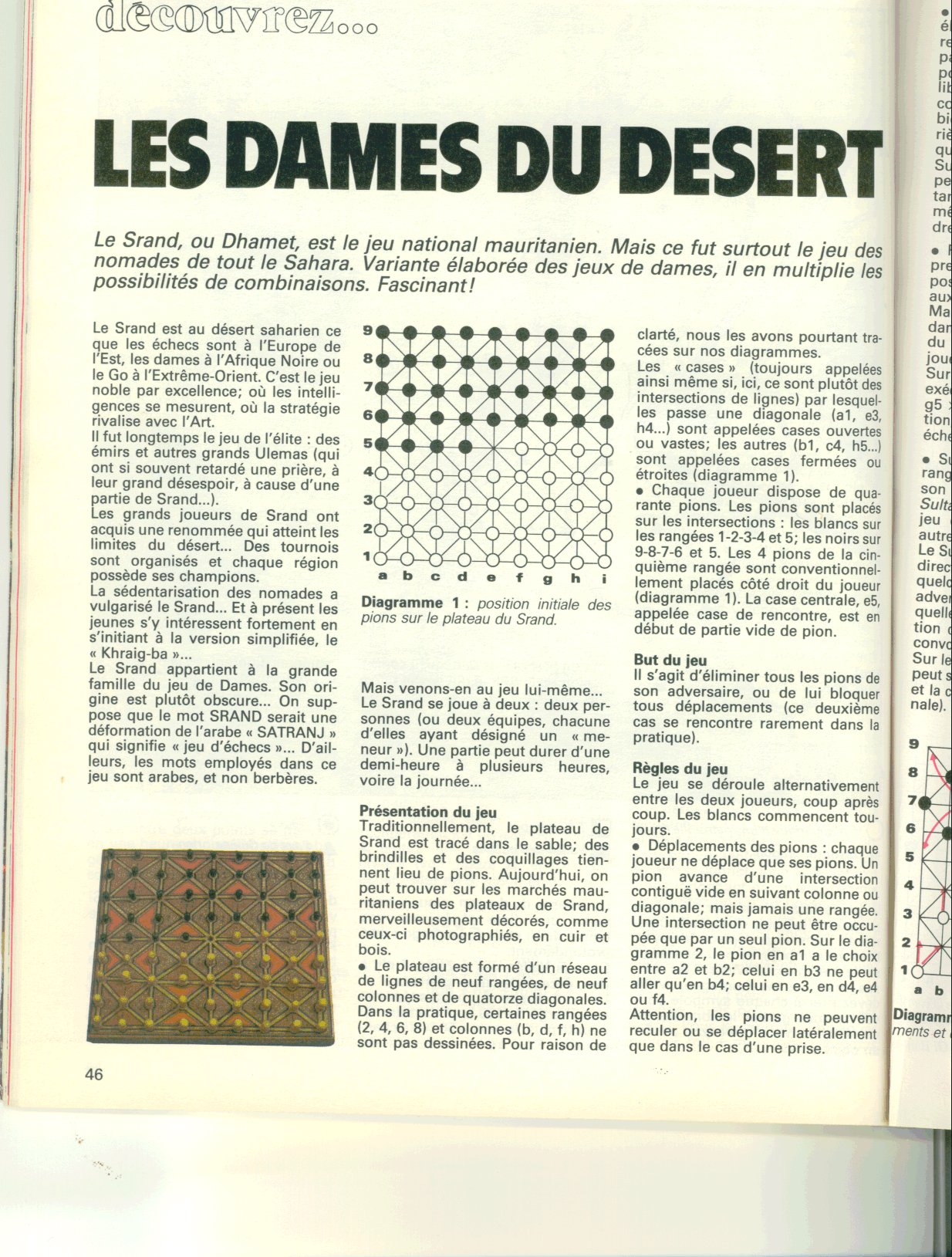
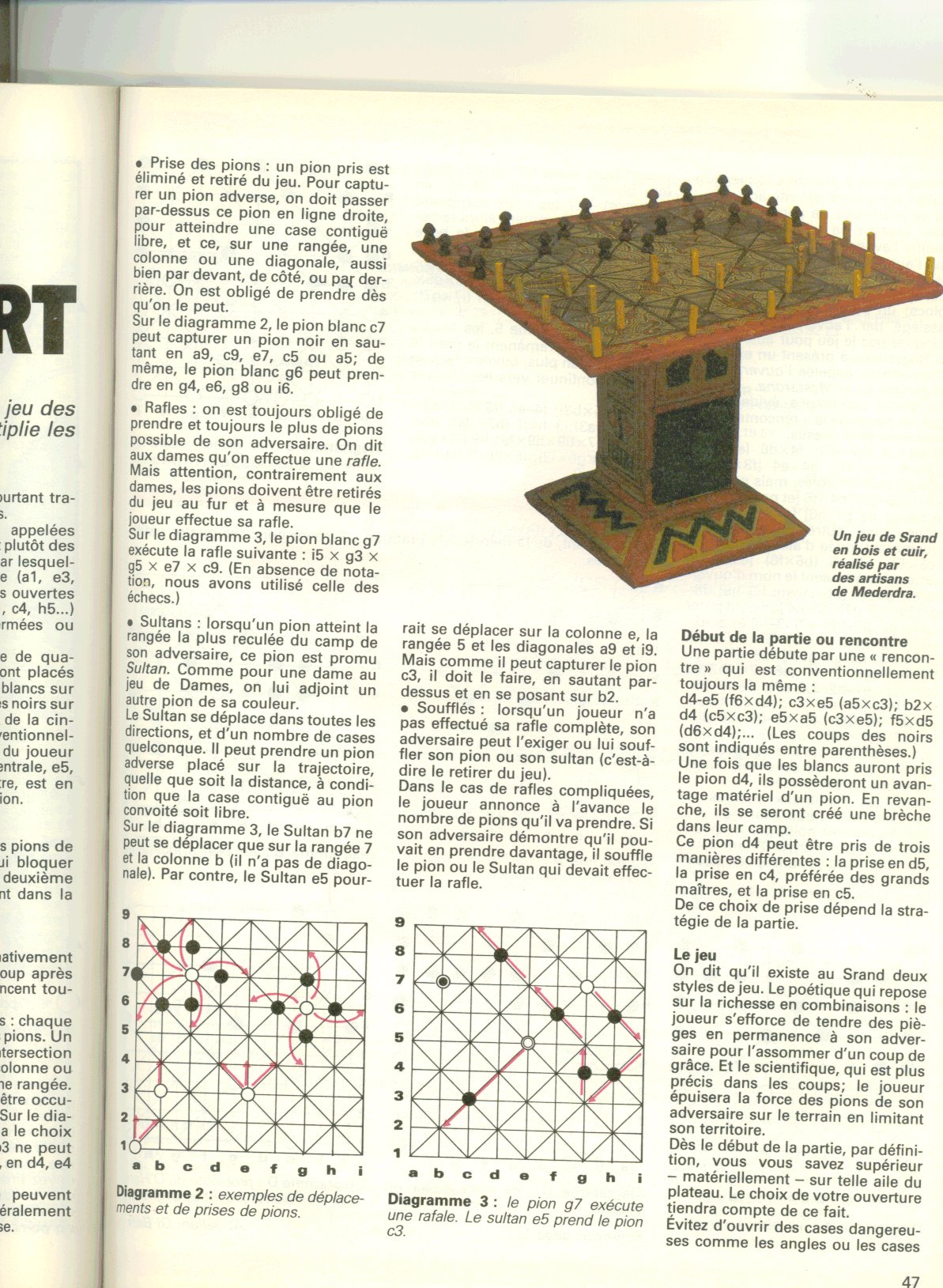
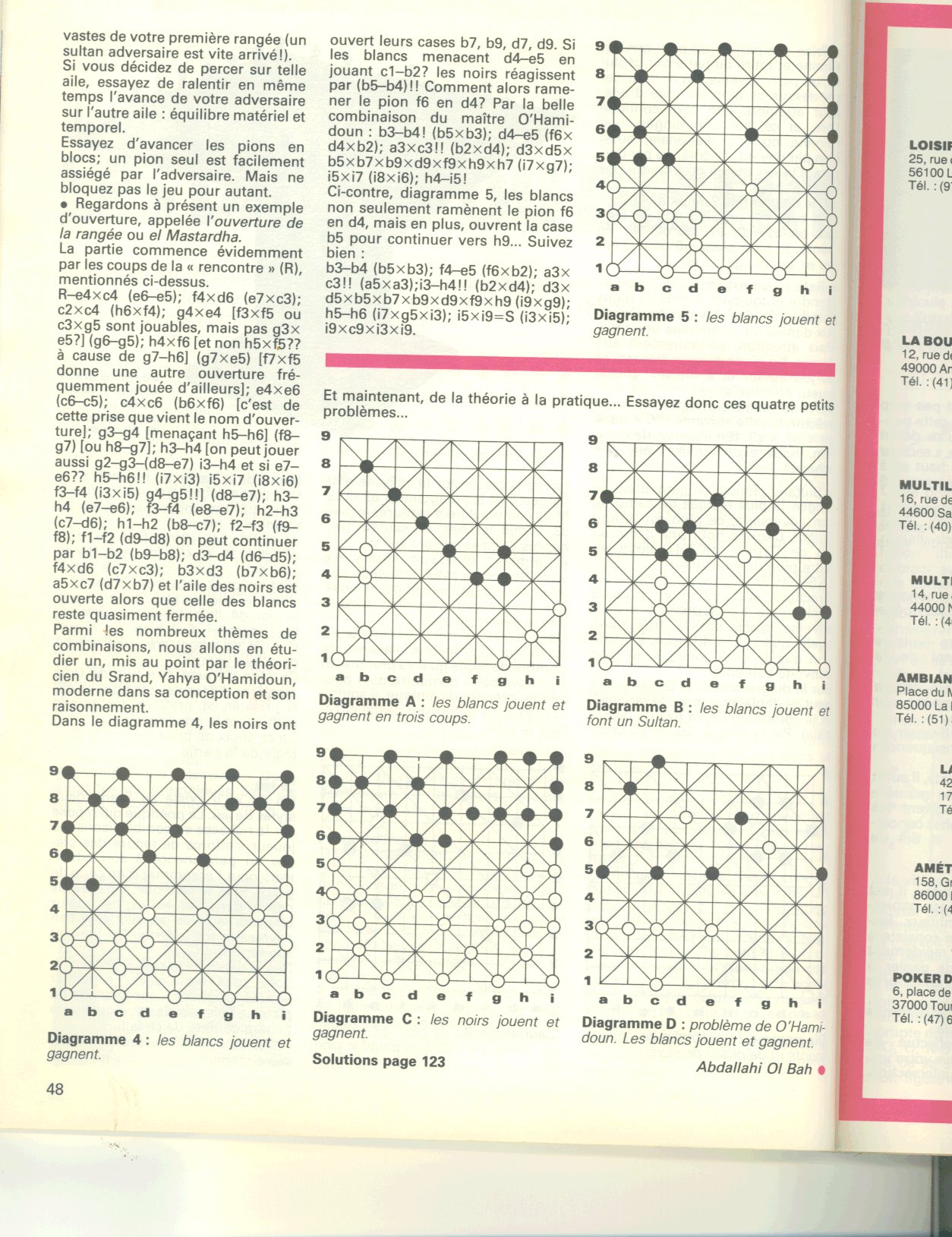
March 6, 2026. Peter Michaelsen, Denmark, sent the following material on Dablo games and related topics and kindly permitted it to be shown here. Michaelsen writes: Mail 1. and a second mail March 31, 2026: Mail 2. Peter Michaelsen Attachments:Dablo - a Saami Game.Le Dames du Desert, page 1. Le Dames du Desert, page 2. Le Dames du Desert, page 3. Permainan Tabal. Dablo in English. Dablo in Norwegian. Rules of Dableo in English. Rules of DabloDame in English. Rules of HexDableo in English. |

Short summary:
The black player must connect the two blue sides with blue dots.
The white player must connect the two orange sides with orange dots.
More videos here especially about game starts and tactics: Educational videos